
Justice for All: Safeguarding Rights and Overcoming Persecution in Bangladesh
The Imperative of Universal Justice
Justice is the absolute bedrock of any stable, humane, and progressive society. Beyond the mere enforcement of penal codes, true justice encompasses a holistic framework where human rights are fiercely protected, social equity bridges historical divides, and economic fairness ensures that prosperity is shared by all rather than concentrated among the privileged few.
For a democratic nation to thrive, justice must extend downward to the grassroots, reaching the most vulnerable and marginalized communities. When the scales of justice tilt away from equity, public trust erodes, systemic oppression takes root, and the foundational promise of a fair society collapses.
What is Justice for All?
“Justice for All” is not an abstract legal slogan; it is an active blueprint for human coexistence. It requires that every citizen—regardless of their social standing, gender, political alignment, or economic background—receives equal protection under the law and unhindered access to redress.
- Human Rights Protection: Ensuring that civil liberties, freedom of expression, and personal safety are guaranteed as birthrights.
- Social Justice: Actively dismantling structural inequalities, discrimination, and marginalization based on caste, class, gender, or rank.
- Economic Justice: Guaranteeing equitable access to resources, labor rights, and fair opportunities, thereby eradicating the systemic traps of poverty and exploitation.
Why Bangladesh Needs Justice for All
Despite impressive macroeconomic growth, Bangladesh continues to navigate deep institutional and social inequalities. The quest for comprehensive justice remains urgent for several key reasons:
- Bridging the Inequality Gap: Disparities in wealth distribution and unequal access to basic services leave millions vulnerable to economic exploitation.
- Upholding Accountability: Combating institutional corruption and the abuse of power ensures that state mechanisms serve the public interest rather than elite agendas.
- Protecting Marginalized Populations: Grassroots communities, minority groups, and ordinary citizens frequently face structural barriers when seeking legal remedies or attempting to hold authorities accountable.
Civic Bangladesh as a Pioneer in Root-Level Justice and Advocacy
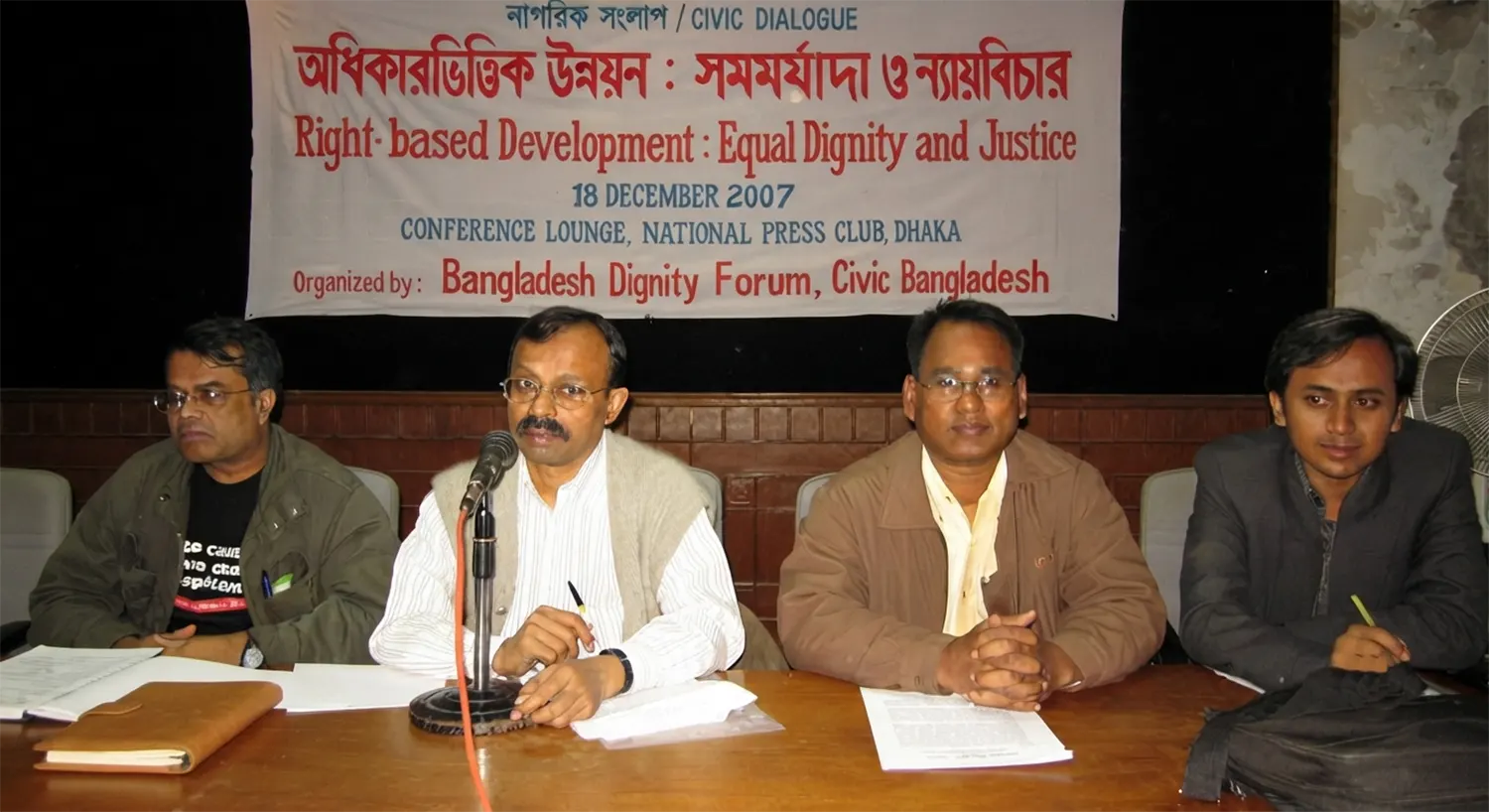
Since its inception, Civic Bangladesh has stood at the vanguard of the national struggle for human rights, democratic governance, and equitable development. Moving far beyond urban-centric discourse, the organization has pioneered grassroots programs designed to empower ordinary citizens to claim their legal and social entitlements.
Grassroots Mobilization and Civic Education
Civic Bangladesh recognizes that sustainable justice begins from the ground up. Through targeted civic education, interactive forums, and community-based workshops, the organization equips marginalized populations with the knowledge and tools needed to understand and assert their rights. By fostering local leadership and building collaborative networks, Civic Bangladesh transforms passive populations into active agents of change who can effectively demand accountability from local and central governance structures.
Advocacy for Human Rights and Social Equity
At the policy and national levels, Civic Bangladesh has consistently championed systemic reforms. The organization leads robust advocacy campaigns, policy research, and public mobilizations centered on equal access to justice, the elimination of rankism, and the protection of fundamental freedoms such as expression, assembly, and association. By linking grassroots realities with national advocacy platforms, Civic Bangladesh creates a unified front against institutional injustice.
The High Cost of Courage: Threats and Persecution Faced by Rights Activists
The path of pioneering justice and confronting entrenched power structures is fraught with severe risks. Human rights defenders, social activists, and organizers associated with Civic Bangladesh have frequently found themselves on the front lines of resistance, enduring intense opposition, intimidation, and persecution.
- Systemic Intimidation: Activists advocating for transparent governance, labor rights, and marginalized communities often face surveillance, harassment, and targeted threats designed to silence dissent.
- Legal and Extra-Legal Pressures: Those who challenge the abuse of power or document human rights violations routinely encounter administrative hurdles, smear campaigns, and malicious legal actions aimed at crippling their organizational capacities.
- Unwavering Resilience: Despite facing constant personal risks and hostility from vested interests, the members, leaders, and grassroots advocates of Civic Bangladesh have demonstrated extraordinary courage, continuing their mission unabated to ensure that justice ultimately prevails.
The Road Ahead
The realization of Justice for All in Bangladesh demands unwavering commitment, structural reform, and collective solidarity. The pioneering work of Civic Bangladesh demonstrates that true social transformation is impossible without protecting human rights, ensuring economic and social equity, and standing resolute in the face of adversity. By shielding its rights defenders and deepening its grassroots outreach, Civic Bangladesh continues to pave the way toward a genuinely free, fair, and just society.